Books and guides for neurodivergent adults, built on over a decade of real-world coaching practice: practical strategies for burnout, executive functioning and sustainable independence.
Practical guides (around 45 pages each) that build on each other: understand your energy, learn to start, learn to recover, and get your space working with you instead of against you.
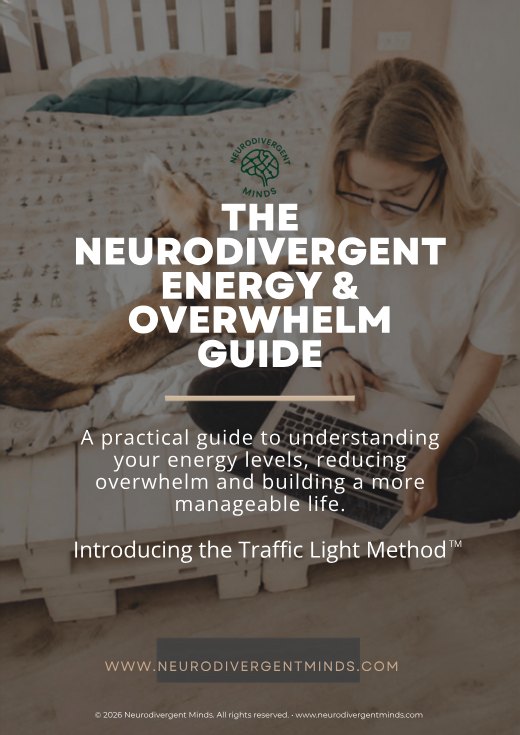
Know your energy
The Traffic Light Method™: understand your energy, recognise early signs of overwhelm, and build practical strategies to manage everyday life.
Stop planning. Start moving.
A practical activation framework for neurodivergent people who struggle to begin. Not another productivity system: a way to make action easier than avoidance, with cognitive admin, motivation and activation explained kindly.
Read the article: Why Starting Is So Hard for ADHD and Autistic Adults →
44 pages · PDF
£6.99Payment confirmed, thank you! Your PDF is ready below.
⬇ Download your PDF
Don't write the whole day off
The 10-Minute Reset: a practical recovery framework for the days that completely derail. Four steps to come back into the day without punishing yourself, starting over or writing it off.
Read the article: When Your Day Falls Apart: A Kinder Way Back for ADHD and Autistic Adults →
51 pages · PDF
£6.99Payment confirmed, thank you! Your PDF is ready below.
⬇ Download your PDF
I keep losing things and creating chaos
A practical guide to making everyday life easier to manage: the system problem behind the mess, deciding where things actually live, so chaos doesn't creep back in once the tidying's done. Built around how neurodivergent minds work, with no need for a perfect house.
Read the article: Why Neurodivergent People Keep Losing Things →
43 pages · PDF
£6.99Payment confirmed, thank you! Your PDF is ready below.
⬇ Download your PDF
Gentle, practical methods for neurodivergent adults
All four methods in one 96-page paperback or Kindle book, with every exercise written out and 27 free printable sheets to download.
About the book →The whole guide series, plus a printable workbook
The three paid guides as one set, for people who want to work on everyday life as a whole: getting started, coming back after overwhelm or a day that falls apart and making home easier to manage. It comes with a 28-page workbook of the worksheets and quick-reference sheets, ready to print. (The free Energy & Overwhelm Guide is separate and free for everyone.)
Saves £5.98 vs buying the three guides separately (£20.97), and includes the workbook.
Payment confirmed, thank you! Your three guides are unlocked, with a download button on each guide above. Your workbook is just below.
The Everyday Life Workbook (28 pages, PDF)
⬇ Download your workbookThe guide series above is written for neurodivergent adults navigating their own lives. These guides are different: written for parents and carers, and focused on one specific moment or decision, with practical steps and fillable sheets, rather than the broader framework.
Home educating? See everything we offer for home education in one place →
Is my child ready to start school?
A neurodivergent-aware guide for the run-up to starting school and the first term, not just a checklist: practical tips, a script for talking to the school, and a fillable profile sheet to hand the teacher.
Read the article: Is My Neurodivergent Child Ready to Start School? →
10 pages · PDF
£5.99Payment confirmed, thank you! Your PDF is ready below.
⬇ Download your PDFIs my child ready for secondary school?
A neurodivergent-aware guide to the move from primary to secondary: what actually changes, a checklist with a practical step for each item, questions for transition days, and a one-page "About me" sheet for the new school.
Read the article: Is My Autistic or ADHD Child Ready for Secondary School? →
11 pages · PDF
£5.99Payment confirmed, thank you! Your PDF is ready below.
⬇ Download your PDFWhat do I do when my child melts down?
A parent's quick reference: what's actually happening, a one-minute guide to what helps in the moment, and how to recover and reconnect afterwards, with fillable sheets so the plan exists before you need it.
Read the article: Autistic Meltdown vs Tantrum vs Shutdown: What Is Happening and What Helps →
12 pages · PDF
£5.99Payment confirmed, thank you! Your PDF is ready below.
⬇ Download your PDFSupporting your child’s mental health when help is slow to arrive
A calm, practical guide for parents waiting on CAMHS, an assessment or any other support: how to use the wait well, what to ask at the GP and at school, how to look after your child (and yourself) at home, and sheets to fill in so you are ready when someone does answer. A practical tool with helplines throughout, not therapy or medical advice.
Read the article: Waiting for CAMHS With an Autistic or ADHD Child →
19 pages · PDF
£5.99Payment confirmed, thank you! Your PDF is ready below.
⬇ Download your PDFThe neurodivergent-aware sleep guide for parents
Gentle, practical ways to make bedtime and nights easier: why sleep can be harder for neurodivergent children, a sensory check of the bedroom, a wind-down routine that works, and what to do when your child won't settle or keeps waking.
Read the article: Why Won't My Autistic or ADHD Child Sleep? Gentle Things to Try →
11 pages · PDF
£5.99Payment confirmed, thank you! Your PDF is ready below.
⬇ Download your PDFCalmer mealtimes, with less pressure
A low-pressure approach to mealtimes for neurodivergent children: why eating can be hard, what to do instead of "just one bite", and gentle ways to widen the range of foods at your child's own pace.
Read the article: Picky Eating in Autistic and ADHD Children: Calmer Mealtimes Without Pressure →
11 pages · PDF
£5.99Payment confirmed, thank you! Your PDF is ready below.
⬇ Download your PDFThinking about home educating?
The practical first-steps guide for families considering home education: common myths, real costs, the honest hard parts, and a 30-day action list.
9 pages · PDF
£5.99Payment confirmed, thank you! Your PDF is ready below.
⬇ Download your PDFA structure for the week, without a school timetable
An energy-led weekly planner using the Traffic Light Method™, for organising home-educating weeks around a child's actual capacity, not a copied school day.
13 pages · PDF
£5.99Payment confirmed, thank you! Your PDF is ready below.
⬇ Download your PDFThe complete set, in one purchase
96 pages across eight parent guides, for families who want the whole toolkit: starting school, moving up to secondary, meltdowns, waiting for support, sleep, mealtimes and home education.
Saves £24.93 vs. buying all 8 separately.
Payment confirmed, thank you! All 8 guides are unlocked, with a download button on each guide above.
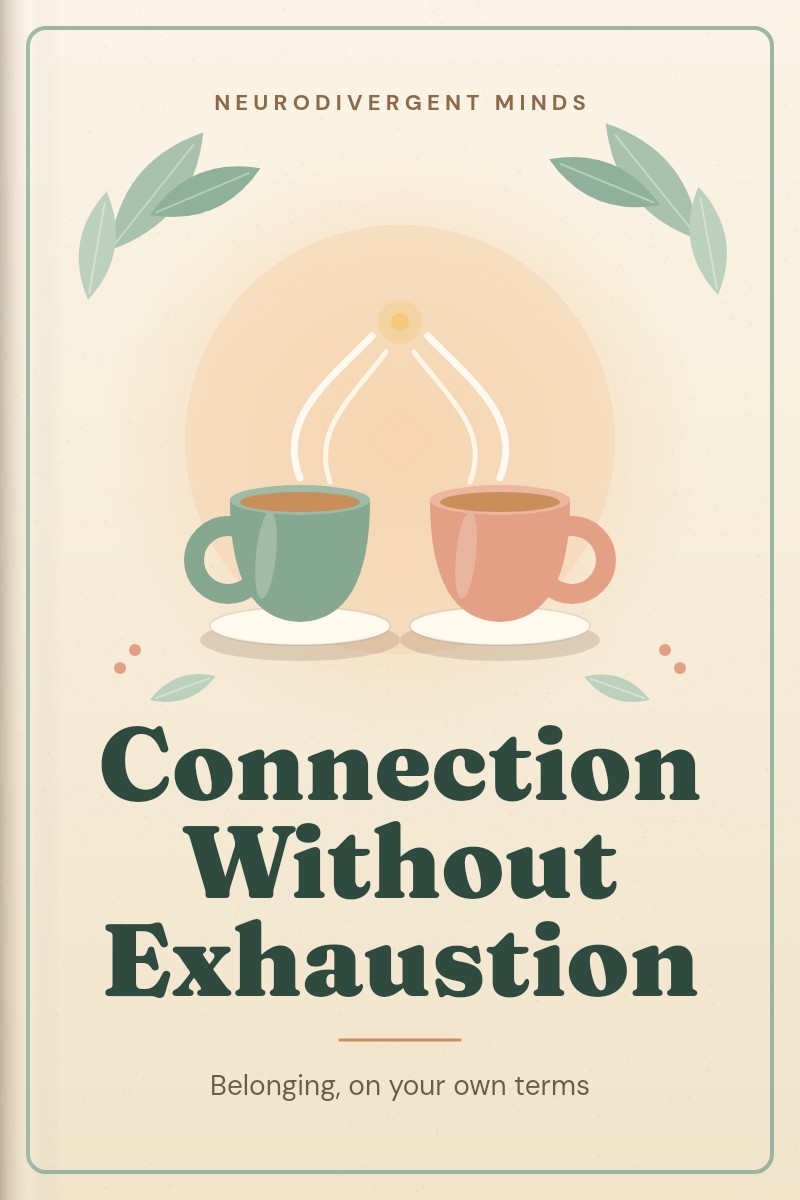
Belonging, on your own terms
Solitude vs. loneliness, without the exhausting social advice
Covers solitude vs. loneliness, the Low-Level Social Contact™ method, friendships, dating, living alone, parenthood and community, for neurodivergent adults who find typical social advice exhausting rather than helpful. Practical loneliness resources for this audience are still relatively rare.
In development · working title A more reflective piece of work, drawing on over a decade of mentoring experience.
Written for practitioners rather than the general reader.
The early years, built on understanding not compliance
Practical classroom strategies for supporting neurodivergent pupils in primary school, from executive functioning to sensory needs, without treating difference as disruption.
Payment confirmed, thank you! Your PDF is ready below.
⬇ Download your PDF
Inclusive teaching that actually holds under pressure
Synthesises practical classroom strategies, feedback, sensory environments and working with parents into one guide for secondary teachers and support staff.
Payment confirmed, thank you! Your PDF is ready below.
⬇ Download your PDF
More independence, less structure, same student
How to support neurodivergent students through the shift from school-level structure to the greater independence and self-management FE college demands.
Payment confirmed, thank you! Your PDF is ready below.
⬇ Download your PDF
Supporting students who are expected to self-manage everything
For personal tutors, disability services and academic staff supporting neurodivergent students through university's heavier executive-functioning demands.
Payment confirmed, thank you! Your PDF is ready below.
⬇ Download your PDF
Practical inclusion, not a policy document
For managers and colleagues: how to adapt communication, workload and environment so neurodivergent employees can do their best work, not just "cope."
Payment confirmed, thank you! Your PDF is ready below.
⬇ Download your PDF
Ongoing, day-to-day practice
The deeper practical guide for once you're home educating: the dual parent/teacher role, feedback without a classroom, and avoiding burnout.
Payment confirmed, thank you! Your PDF is ready below.
⬇ Download your PDF
The flagship guide for the series
Cognitive Admin applied across a client's whole life, not just work: career, the 3-Minute Blitz method, sleep, social connection, home systems, burnout and the coaching relationship itself.
Payment confirmed, thank you! Your PDF is ready below.
⬇ Download your PDF